Monday, 10 October 2016

Wednesday, 21 September 2016
Wednesday, 7 September 2016
Norfolk Production Companies
JMS Group
The JMS Group, originally called John Mountford Studios, was
founded in September of 1983 by John Mountford in Norfolk. Since then the company has
grown and now has a team of 14 workers and specialise in advertisement. They
have worked with companies such as Anglian Water, Sky and Disney on Ice.
One advert they made was for Disney Frozen Dresses designed
by Rubies. The advert features two girls in fancy dress that are designed like
the two main characters from the popular Disney animation Frozen (Anna and
Elsa).
The Nature and Purpose of Research
Types/Methods
of Research
Primary Research/Self-Generated Research
Primary research is research that is gathered first hand
usually through interviews, questionnaires e.c.t that are related to the
subject area. When I was gathering primary research for my documentary I put
together a questionnaire and sent it out and then bought the feedback together
to create my research.
Secondary Research
Secondary research is research that is gathered for other
sources such as books, newspapers, internet forums e.t.c. that are related to
the subject area. When I was collecting secondary research for my documentary I
used newspapers and projects with the same aim. For the research related to my
TV advert I used websites, like the official magnum page. Another way I produced
secondary research was through watching pieces that were either about the same
thing or had similar filming and editing techniques.
Quantitative Research
Quantitative research is information that is
gathered from film/television program ratings, CD and DVD ratings, e.t.c. This
type of research is more about numbers and calculations that are made after the
release of a media product.
Qualitative Research
Qualitative research is information that is
gathered from reviews, discussions (e.g. forums), e.t.c. This type of research
is more about ideas and opinions. When I was doing research for my documentary I
looked at tourist reviews and blogs about living in Gorleston.
Data Gathering Agencies
BARB (Broadcasters’ Audience Research Board) is
a database that puts all ratings for media products in one place. The IMDB (The
Internet Movie Database) is a website that collects information, including
reviews, cast & crew lists, e.t.c. and puts them together to make a profile
for films, television programs and video games. Other research agencies include
TNS Global, Green Book, Live Minds and many more.
Purpose
of Research
Audience and Market Research
When doing research into the audience and market for my TV
advert I watched Magnum adverts, read reviews about the product and searched
through their website. From doing this I was able to decide what their
demographic and psychographic was. I decided what audience I wanted to aim the
advert at and did further research into the best ways to target that specific
audience.
Production Research
Throughout all of the projects I conducted research into
budgeting (how much things would cost and how to make them affordable). Another
thing I did throughout was location recces. A location recce is done before
filming starts, it involves going to locations and checking how suitable it is
to film in. These recces also help create a risk assessment allowing us to
prepare for any incidents that make occur.
Friday, 1 July 2016
3MW Feedback
Some excellent work in this unit and a well-though through and well produced documentary.
You have comprehensively explained issues relating to factual television programmes with elucidated examples and consistently using subject terminology correctly.
You have comprehensively explained codes and conventions of factual programmes with elucidated examples and consistently using subject terminology correctly.
You were able to plan and research a factual programme for television to a quality that reflects near-professional standards, showing creativity and flair and working independently to professional expectations.
You have produced a factual programme for television to a technical quality that reflects near-professional standards, showing creativity and flair and working independently to professional expectations.
An excellent springboard for next years work.
An Introduction to the News
Part 1
 I watched the BBC Look East Evening News that was broadcast
on the 30th of June 2016 at 6.30pm.
The stories that were covered are listed below in chronological order:
East Anglian Devolution
·
Recruitment Prices of Teachers
·
The Sentence Dealt to Kevin Toye for the
Manslaughter of his son
·
Bernard Matthews changing hands
·
Gala Dinner
·
Battle of the Somme Remembrance Services
·
Brexit Effects on Local Tourism
·
British Art Show Coming to Norwich
 The opening sequence included a quick overview of the main story
lines and iconic scenes from the local area (East Anglia) including the pier
and farming. I think that an overview was used in the opening sequence so that
the audience’s interest is engaged from the very start and could be held
throughout the episode and the iconic scenes were used to reinforce that the
segment was about the local area and news that affects the people that live
there.
Part 2

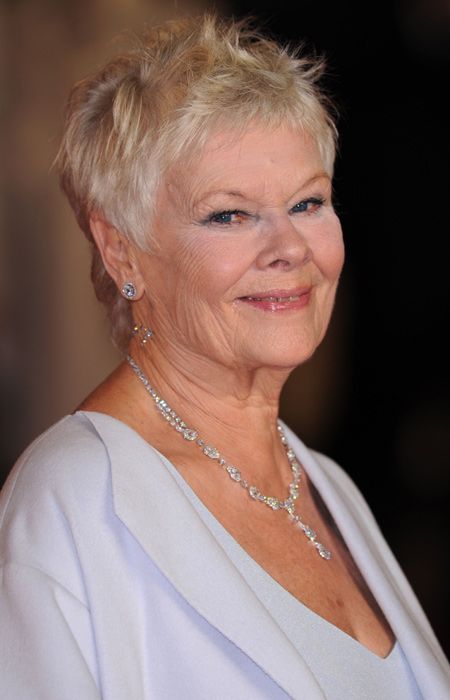
The main two newsreaders were Susie Flower-Watt (picture on the left), female aged
47, and David Whiteley (picture below on the right), male aged 39. Other news readers included Andrew
Sinclair (male, political correspondent), Alex Dunlop (male), Richard Bond
(male, business correspondent), Gareth George (male), Shaun Peel (male), Mike
Liggins (male), and Alex Dolan (female, weather reporter).

The role of a newsreader is to present a storyline to the public informatively so that everyone in the audience is able to understand. Some stories may allow them to give an opinion, however usually the only opinions that are mentioned throughout the story are from the people that are interviewed.
Every news reader must have effective communication skills, be enthusiastic about everything they have to present where they disagree with the story or not, and have strong verbal skills in whatever language they are presenting in.
Part 3

The term “ordering” when used in the news means the order in
which each story appears in the news bulletin and the list of stories compiled
together is called a “running order”. The lead story is always the story which
is shown first, it is selected as the lead by how important the story is to the
audience. Other stories are shorter than the lead and are presented in order of
interest, the stories closer to the end of the broadcast are usually of similar
themes and can often be grouped together in a “news round-up”.
It is important
to think and act quickly in the news as things happen in real time, so if
something happens that is more important, the running order must change
straight away to fit around the new more important headline. A slow news day is
a day when nothing that can be considered high priority or important so trivial
stories are presented to fill the gaps.
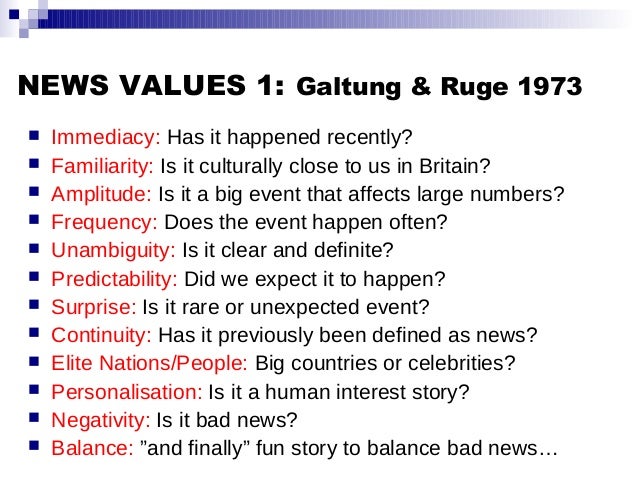
The last story is usually a “lighter story” and is called the “and finally”. It usually ends the news on a more positive, cheery note. The term “news values” means the importance the story has and how much attention it gathered from the audience. Galting and Ruge is a list of news values that nearly every story can be categorised as.
The last story is usually a “lighter story” and is called the “and finally”. It usually ends the news on a more positive, cheery note. The term “news values” means the importance the story has and how much attention it gathered from the audience. Galting and Ruge is a list of news values that nearly every story can be categorised as.

Looking back at the news bulletin I watched the first story
about the East Anglian Devolution can be categorised as both immediacy and
negativity as it was the lead story in the round up and it included the fact
that there was a loss of funding. The second story about the recruitment prices
of teachers would fit under personalisation as it affects most people and their
education. I think the story about Kevin Toye’s sentence for killing his son
would come under familiarity but only because he was in fact from Norfolk so
the devastation of the young boy’s death feels more close to home. The story
about Bernard Matthew’s changing hands may fit under continuity as during the
story it was mentioned that the company hadn’t been doing as well since the
outbreak of the bird flu a few years ago. The story about the Gala Dinner will
definitely be associated with elite nations/people as the Duke and Duchess of
Cambridge were involved. Amplitude would be the category that the story about
the Battle of the Somme remembrance services over a million men died during the
battle and people nationwide are taking part in remembering their horrific
deaths. I think that the Brexit
effecting local tourism would come under unambiguity as some people in the
report were saying that it was going to have a positive effect and others were
saying it was going to have a negative effect. And finally, the balance story
will most definitely be the story about the British Art Show that was presented
at the end.
Part 4
Bias through selection and omission means whether or not a
particular story is shown and if it is how it is angled to give the audience a
specific view. For example, if the news reported a story about one of the MPs
that are now running for Prime Minister and they show them pushing past the
camera saying “no comment” this could portray them as an aggressive person and
give the audience a negative view on them, this could affect their campaign.
However, if they just show a clip of them walking with a smile on their face
giving the camera a wave then the audience would see them as a friendly person
giving them a positive view on them.

The running order can also be affected by bias, the stories
that are broadcast at the start are more important than the stories closer to
the end. The running order in the Look East Broadcast that I watched had the
East Anglian Devolution as the lead story making it the most important, this is
usually based on the editor’s opinion and will affect the audience’s opinion.
 The headline of the news story (this is usually used in the
opening sequence of the broadcast) sums up the story and reflects what it is
about or the feeling people have about the topic. This is a form of bias as the
person who wrote the story would have chosen how to portray the piece. On the
BBC website there is a story called “where did it all go wrong for Johnson?”
this sums up the story, portrays it to be negative and also sticks the question
into the audience’s head so that they will be curious enough to watch it.

The photos and camera angles can form bias on a story and
can have a strong influence on the feel/opinion made. For example, recently a
train broke down in the Eurotunnel and the photo used reminds the audience of a
horror/thriller film scene; it shows a line of people walking through the
tunnels with only the lights on the side of the tunnel to guide them through.
 The news normally always introduces whoever is shown on
screen using their name and a small description (usually a few words), whoever
writes this description can affect how the audience makes their opinion of them
through bias about the person. For example, in a news article about Judi Dench’s
tattoo she is called “Dame Judi Dench”, if the audience doesn’t know anything about
her they’ll know she has some significant importance as she was awarded the
title of “Dame” by the Queen.
Another bias can take hold through the word choice used throughout
the story, either giving the topic a positive or negative connotation. For
example, a news story on the BBC website about how the EU Referendum might
affect science wrote “a leading scientist has said UK science will suffer
unless any post-

Picture Sources:



Subscribe to:
Posts (Atom)